
Showing posts with label 1997. Show all posts
Showing posts with label 1997. Show all posts


26/06/2014
Moscú celebra sus 850 años con macroespectáculos en la plaza Roja


La nueva Rusia se viste estos días de gala en Moscú para celebrar el 850º aniversario de su capital con un mastodóntico programa de actividades, algunas de las cuales pueden terminar en el libro Guinness de los récords. El director de cine Andréi Konchalovski montó anoche un macroespectáculo en la plaza Roja; Luciano Pavarotti cantará mañana ante una multitud en el mismo escenario; los artistas del Bolshoi representaron ayer escenas de óperas rusas en la plaza de las catedrales del Kremlin, y Jean Michel Jarre ofrece esta noche un tecno-concierto masivo frente al rascacielos estalinista de la Universidad Lomonosov. Se trata de crear una imagen de modernidad y grandeza, a la mayor gloria del alcalde y presidenciable Yuri Luzhkov.
Oleg Belikov, director ejecutivo de los fastos, asegura que los fuegos artificiales se verán desde todos los barrios de la capital; que Jarre contará con su tradicional derroche de rayos láser y otras técnicas ultramodernas y con dos enormes pantallas sobre el edificio de la universidad, y que la ceremonia de clausura convertirá mañana toda una tribuna del estadio de Luzhniki en un gigantesco escenano.Luzhkov ha querido que todo se haga a lo grande. Durante cerca de año y medio, se han gastado para preparar la fiesta más de 10.000 millones de pesetas, la quinta parte procedente de patrocinios privados. Hasta el tiempo tiene que acompañar, si no falla el dispositivo especial, con ocho aviones y dos helicópteros, que permitirá el bombardeo de las nubes con productos químicos especiales para que suelten su carga fuera de Moscú y no puedan aguar la fiesta.

Sólo 6.000 privilegiados provistos de invitación tuvieron anoche ocasión de presenciar con comodidad el espectáculo de Konchalovski en la plaza Roja, con el fondo de los muros y torres, del Kremlin y del mausoleo que alberga la tumba de Lenin. Para ellos ideó un peculiar montaje Andréi Konchalovski.
El cineasta afirma que su obra se sitúa, en cuanto a la forma, "entre la escenificación de Aida ante la pirámide de Keops y un superconcierto de rock", pero que, en lo que respecta al contenido, tiene más que ver "con la música clásica rusa, la historia y la mitología". Ha contado para ello con la ayuda de Mark Fisher, diseñador de giras de los Rolling Stones, Pink Floyd, Elton John y Tina Tumer.
Desmesura
Coros, bailarines, bandas militares, una orquesta sinfónica e incluso un elefante participaron en el espectáculo titulado Nuestra antigua capital, igual que un libro escrito por la madre de Konchalovski, Natalia, con ocasión del 800º aniversario de Moscú, en 1947, y con Stalin, el hombre de hierro, en el poder. Entre tanta desmesura, lo que más llamó la atención fue un enorme dragón de 35 metros de largo con una cabeza de 3,5 metros de alto y 2 de ancho.
La base del concierto de Jean Michel Jarre será está noche su archiconocido tema Oxigene, pero con inclusiones de coros y música rusa y toques relativos a la historia de Rusia. Unos 100.000 policías intentarán que la fiesta no degenere en tumulto, y centenares de perros especialmente adiestrados filtrarán a los asistentes para evitar el paso de droga. El espectáculo se podrá ver desde diferentes puntos de Moscú, ya que el propio cielo será uno de sus escenarios.
El programa de festejos es casi interminable, con la música de protagonista indiscutible. El elenco del Bolshoi ofreció ayer a un público muy restringido, entre el bosque de cúpulas doradas de la plaza de las catedrales del Kremlin, una selección de las más famosas óperas rusas para ilustrar la historia del país y de su actual capital.
Unos 2.000 cantores de toda Rusia participarán en un festival de coros ante la recién inaugurada catedral de Cristo Salvador, una copia exacta (por fuera) de la que Stalin convirtió en solar, y levantada en el mismo lugar que su precedente, allí donde, durante décadas, hubo una gran piscina al aire libre.
Grupos artísticos de Ucrania, Bielorrusia, Polonia y otros países actuarán mañana en la plaza Roja en una especie de maratón titulado El mundo eslavo saluda a Moscú.
Todo un superfestival a la mayor gloria de la ciudad que se presenta como escaparate de la nueva Rusia, llena de luces y sombras, aunque durante la fiesta nadie quiera hablar de estas últimas. Y, por supuesto, a la mayor gloria de Yuri Luzhkov.

"El 'tecno' es el gran movimiento musical de los noventa", afirma Jean Michel Jarre

14 de marzo de 1997
El músico francés coincide en Madrid con Jackson Browne y Art Garfunkel

Los dos nacieron en 1948, uno en Lyón y otro en Heidelberg. Ambos son
músicos con una larga carrera que empezó en los años setenta y
conservan un envidiable aspecto juvenil. Pero ahí acaban las similitudes
entre Jean Michel Jarre y Jackson Browne, dos creadores con caminos
divergentes. El primero atado a la música electrónica; el segundo, a su
guitarra acústica. El primero, absolutamente abstracto; el segundo,
perdidamente narrativo. Sin embargo, hay una cosa más que tienen en
común: Jarre y Browne sienten que la música es parecida a la pintura.
Ayer coincidieron en Madrid, con Art Garfunkel (que se puso enfermo y
suspendió sus encuentros con la prensa). Jarre, que acaba de publicar
Oxygene 7-13, después de 20 años de su primer Oxygene, considera que el
tecno "es el gran movimiento musical de los noventa".
Los pintores suelen decir que cada cuadro que pintan es una especie de búsqueda de la imagen ideal, la que tienen en la mente e intentan plasmar. Jean Michel Jarre siente de la misma forma. Acaba de publicar Oxygene 7-13, después de 20 anos de su primer Oxygene. "Yo soy también pintor y es exactamente así como me siento", afirma. "Cezanne decía que no hacía más que pintar una y otra vez la misma naturaleza muerta esperando conseguir algún día hacerla tal como lo deseaba. Yo considero mi trabajo en música muy cercano al de un pintor".Como era de suponer por lo dicho, la pintura de Jean Michel Jarre es abstracta. "No tiene nada que ver con ninguna intención narrativa", explica. "He estado envuelto en lo que se llama abstracción lírica, como lo que hizo Soulages, Hartung o Jackson Pollock. La primera exposición que vi de Soulages en París tuvo más influencia en mi música a nivel emocional que otras músicas que he escuchado".
La relación entre música y pintura es para él muy estrecha. "Mi aproximación a la música tiene mucho que ver con la parte artesanal de la pintura. Me interesa cada vez más la densidad de las texturas, la perspectiva, la composición coherente y equilibrada. Oxygene sólo tiene sentido si lo enmarcamos en esta relación". Un buen día Jarre decidió ir en busca de sus viejos sintetizadores arrumbados en el desván y descubrió las posibilidades que aún tenían. "He utilizado el Mocig, el Arp 2600 y el Melotron. Este álbum es una continuación de 0xygene, no en términos de melodías o ternas sino en texturas y sonidos. Un regreso al origen de mi propio trabajo. No niego el pasado, intento mirarlo en perspectiva", dice.
"Estoy convencido de que este corto periodo en el que los sintetizadores analógicos fueron creados por verdaderos artesanos fue muy importante. En su época eran mirados como frías máquinas. Pero pienso que entonces éramos como pigmeos ante un gran piano de cola. A principios de los 80 la industria japonesa empezó a manufacturar sintetizadores que buscaban la perfección en la reproducción del sonido, con la tonta idea de buscar posibilidades ilimitadas. Yehudi Menuhim decía que el violín es un instrumento artesanal muy limitado, ésa es la razón por la que con él puede dar rienda suelta a su imaginación".
En opinión de Jarre, Ios ochenta fueron un periodo muy cínico". "Todo tenía que estar bajo control", comenta, "reluciente y frío, como fueron los yuppies. Predicaban la supremacía del mito digital. En los 90 nos hemos dado cuenta de que no somos animales digitales, somos más analógicos, más subjetivos, somos personas con lados oscuros. El futuro de la música tomará lo mejor de ambos mundos".
Este compositor ve también con optimismo el auge de la música tecno entre los más jóvenes. "Tengo muchas cosas en común con ellos", afirma. "Estoy de acuerdo en que el tecno es el gran movimiento de los 90. Tengo mucho respeto por los DJ (disc jockeys), que están desarrollando su propio virtuosismo. La habitación de un DJ es como una cocina. Puedes cocinar tus propios platos con especies e ingredientes improvisados. Es la actitud más física y orgánica que se puede tener hacia la música. Es así como veo mi trabajo. Para mí el patrón melódico es un pretexto y pretendo que la armonía sea tan minimalista como la melodía. Son sólo soportes para explorar las texturas y capas de sonido que entran en evolución. Es algo físico, como lo es la piedra para el escultor".
31/03/2014

18/02/2014
Jean Michel Jarre - Place de la Concorde 14th July 1979 (Promo video)

Recorded 14th july 1979 in Paris.
Total playtime approx. 30 minutes (not the full concert).
An unparalleled event - 1 million people gathered - in a unique setting: La Place de La Concorde in Paris. from this exceptional concert - Jean-Michel Jarre directed the first musical videogram: images specially made for videocassette. music from Oxygene and Equinoxe - directed and conceived by Jean-Michel Jarre"
(text taken from the video sleeve)

27/10/2013

11/04/2013
Oxygène 7--13 - (Oxygène VII & X)
-front.jpg)
Oxygène 7--13
...is a 1997 album of instrumental electronic music by Jean Michel Jarre, his ninth overall studio album. It is the sequel to his 1976 album Oxygène, and is dedicated to Jarre's former mentor, experimental musician Pierre Schaeffer. While the album was recorded using many of the same synthesizers as Oxygène, and the titling suggests a continuation from where the first album ends, many tracks have a more uptempo, trance-like character. The album is not as widely acclaimed as the original Oxygène, but has been quite successful nonetheless, especially among fans. Released approximately twenty years after the worldwide release of the first Oxygène, it is Jarre's final album in his traditional style (exclusive of Oxygène: New Master Recording), and thus comes full circle. It was also the last album by Jarre featuring Michel Geiss as collaborator.
"Oxygène 7", "Oxygène 8" and "Oxygène 10" have been released as singles. A number of remixes of Oxygène 7--13 tracks have been made, including those comprising most of the album Odyssey Through O2. The Orb's single "Toxygene" was originally intended for release as a remix for the single release of "Oxygène 8", but was rejected by Jarre for being too distant from the original.
09/04/2013
Maurice Jarre - Interviews 1997

Le compositeur Maurice JARRE est de retour au festival de théâtre
d'Avignon. Il est très attaché à cet événement auquel il avait participé
au temps de son créateur, Jean Vilar. Pendant les douze premières
années du festival, il en était le compositeur. Aujourd'hui, les "34
musiques de scène" créées à cette époque sont rééditées
Portrait du compositeur de musiques de films Maurice JARRE, installé aux Etats unis.
06/04/2013
Jean Michel Jarre - Oxygene 8 (Istvan Banyai) Promo Video
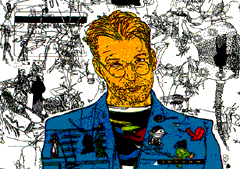
Istvan Banyai
The creator of the animated Oxygene 8
video - which was used as the television commercial for Oxygene
7-13 - is Istvan Banyai. Istvan was born and educated in
Budapest, Hungary and currently resides in New York City with his
wife and son. He is a commercial illustrator and animator whose
work appears regularly in magazies and newspapers.
"My
work," explains Istvan, "is an organic
combination of turn-of-the-century Viennese retro interjected
with American pop, some European absurdity added for flavor,
served on cartoon-style color, and garnished with miniature
details - but absolutely no social realism added."
Istvan has published three illustrated books
with Viking Press:


Jean Michel Jarre - exclusive interview with Jean Michel about his new album 'Oxygene 7-13' ( 1997)

Q.1 What inspired you to write and record Oxygene 7-13?
JMJ: 'The idea behind Oxygene 7-13 was not to do a Rocky II. It was more an idea of continuing something I had done a few years ago. And I had this idea almost as soon as I had completed the first 'Oxygene'. I didn't necessarily plan to do this Oxygene 7-13 this year. It could have been last year or next year. But it happened like this and at the moment where it seems that a lot of people seem to be more and more interested by analogue instruments and analogue synthesisers, to go back. It's like for a guitar player to play on an old Stratocaster for instance, instead of getting the latest midi guitar, whatever. In a sense, I would say, that if it is not my unplugged album it is a kind of replugged album for me. To be replugged to my roots, to this kind of excitement I always felt by working on textures and working on sounds with no particular strategy but just having fun dealing with sounds.'
Q.2 How did you approach writing and recording Oxygene 7-13?
JMJ: 'The main excitement for me of making music is really dealing with textures, with colours. Almost considering sounds like actors, like when you are directing actors on a stage. It is the same kind of attitude I've always been interested in. And it was to this Oxygene 7-13 — 7-13 because the first one was part 1 to 6, was really to try to approach composition in this way rather than playing a melody or playing a tune. Starting with raw elements or structures exactly like when you are starting a sculpture on the stone, when you have just the raw elements and then you deal with these raw elements and from time to time you have shapes, give birth to shapes, and it's exactly what I try to do in this project by, for instance, using instruments like Mellatron or Theramin, but also the first old analogue synthesisers where you can really deal with the actual shape of the sounds. And then working, I mean trying to assemble sounds like in nature, I mean you have a lot of things that are not necessarily made to, co-exist. It's like your fingers, you know the shape of each finger with time is taking the shape of its neighbour. When you are a kid your fingers are quite straight and with time one finger takes the shape of the next one. It's exactly the same with sound. Time for each sound being shaped by its neighbour. And so a part of this, a big part of the composition on this project, has been to work on the console, to actually, I would say, knead, like you are kneading clay. Kneading sounds.'
Q.3 How does this continuation compare with Oxygene 1-6?
JMJ: 'I felt that the first Oxygene has a kind of transparency quality because of the minimalist approach. The fact that you have now so many layers so each layer is much more important because it has some space, and the idea of allowing time for each part to develop. It has been the most difficult thing for me that, for the new one. I think the new one has a different pace anyway. I mean its a true continuation, because the second one is a development of the first one. It's not exactly the same mood. It's a mood later.'
Q.4 How did you keep the minimalist approach?
JMJ: 'One of my ideas at the beginning was never in this project using more than 8 elements if not 8 tracks but not more than 8 elements at a time. I succeeded more or less. And because it gives them space to each sound. It gives a kind of oxygen to each sound.'
Q.5 Has the way you work changed over the years?
JMJ: 'When you are doing your first work, shooting your first movie, when you are writing your first book, when you are doing your first record, you are doing it in a very unconscious way. It's not instant, because it carries actually all what you have been through since you have been born. And then after this kind of rather unconscious way of making music the following projects are trying to adjust, to be in contradiction, to explore other fields, and then when I went back to this new Oxygene it was with the idea of going back to this rather unconscious way of perceiving sounds. By using originally the same instruments, so I went back, mainly to the first instruments as a starting point. The first analogue instruments. The first instruments I ever have ever used in my life. They are like, I would say, part of a personal museum, almost. They seem these days like a Stradivarius of electronic music. The old Moogs, the old harps, the old Mellotron or Theramin. I never felt such a kind of possibility of being central, being like a craftsman. I mean really working with your hands and being tactile rather than just intellectual. With electronic instruments rather than acoustic instruments. It's not a problem of making comparisons and saying what is the best. It is just a different attitude. And I've always been fascinated, almost like a child, by this kind of analogue gear where you can really, I mean, I would say, fiddle about, play with sounds and play with, not with concepts, but actually with ingredients.'
Q.6 Where did you get the inspiration for Oxygene 7-13?
JMJ: 'For this project I tried also to move a lot, to travel a lot, to try to get not necessarily influences in terms of sounds, but influences in terms of landscapes and moods. To try not to come in to the recording studio with just preconceived ideas of themes or sounds but trying to trap myself in different situations by experimenting in various places, or various countries almost like when you are playing the violin. I used one keyboard and one small recorder just exactly like with an acoustic guitar, or with a violin or a portable instrument. To be able to make music on top of a mountain or by the sea or in the country or anywhere, to try to break the walls of the recording studio basically.'
Q.7 How did you maintain the feel of the recording?
JMJ: 'The whole project has been done by hand I would say. I mean from the beginning where I really started the composition process and writing the tracks and doing the tracks really with one instrument and one small recorder, a small desk that could work on batteries so I could travel and do some music wherever. And during the recording process I used a lot of analogue processes also. I mean having sounds, playing sounds through small speakers as well as having old analogue tape recorders, I used a lot of tape echoes and not digital kind of delays but tape delays with old instruments, with old tape recorders like the Revox. And also in the mixing process, mixing by hand gave an entirely different situation. The way of dealing continuously with the old textures but also you have the possibility to do 20 totally different mixes in 1 hour. And this kind of almost considering your mixes like when you are using a Polaroid and suddenly having a lot of possibilities, also makes you much less passive in front of technology, because in an automated mixing situation you are always a spectator of your work. When you are mixing by hand, you have to recondition yourself each time to go back to square one, to go back to scratch and play the whole piece again. Exactly like when you are playing with a keyboard or playing with a guitar. The whole piece again. Instead of, for instance, asking somebody to do a chorus on an electric guitar and saying oh yes could you redo that, could you replay that particular note. The rest is fine — it's just impossible. I mean mixing by hand is exactly the same thing. I mean if you are starting from square one you replay and reinterpret the whole piece so it has that kind of freshness and spontaneity that you may lose with an automated mix.'
Q.8 How important is the mixing stage?
JMJ: 'The mixing for this project has really been part of composition. Doing the tracks and doing the tunes by not only in a mixing situation when you are for instance you think that you should have more bass, in the information processes as we know it, you just move the bass. In that kind of music if you move the bass slightly you are changing the whole perspective of the soundscape. So you have actually to reposition everything and this constant repositioning that the manual mix allows, gives a kind of special life to the sounds that was quite important for this piece of music.'
Q.9 Do you enjoy the concept of the remix?
JMJ: 'What I like with the remixing situation is it helps to make the process of finishing the album, as you said before, less painful because you can still continue to be immersed in your own work for weeks. Because I mean, you are remixing the first single, then you have the second single, the third single. It's a process that can last forever. It's what you have to stop at one stage, but it is quite nice because you can experiment on the finished project which is also quite exciting.'
Q.10 How important is the album cover artwork?
JMJ: 'I always thought that the album cover is very important. Even more important for what I'm doing than for an album made of songs. The idea is to try to give an opportunity to have a kind of visual continuation. So for this part of the project I wanted to work with the artist who did the first one, obviously. And he's a French artist called Michel Granger and he did a few covers for me. One was Oxygene, Equinoxe, and Rendez-Vous also, and this new one had to also be a kind of continuation for him. And he went with the idea of reversing the process where you had a human skull, a human presence in the earth for the first one and on the cover of the second one is the earth inside a human figure. The first one it was a not necessarily a statement but it was linked with all this ecological problems that the late 70s had to face.
By the end of the century it is more linked to, I would say, surviving day to day life. And I like very much the idea of Michel Granger about having the earth inside a human figure and the earth is the heart of that guy, of this creature. And I think it's good when you put the covers back to back it's quite interesting, it's a nice graphic statement. I like this kind of poetic way of continuing the first idea.'
Q.11 What is the concept behind the video for the single Oxygene 8?
JMJ: 'Kevin Godley is the director doing the first video with the idea of the music being the interface between the inside world and the outside world. I mean a kind of meditation on the letter O, of the symbol O of Oxygene. And then he created a sort of device with lenses of various diameters, where you can see through. I can see through to the outside world and you can see me through, I mean in a kind of distorted way, through these lenses. But you know you start with a very nice idea and you never know what's going on. That is part of chance. I mean 7-13, 7 and 13 are very interesting numbers because 7 is a lucky number and 13 is a chance number so I don't know at the moment where we are, between 7 and 13. Actually I know where it is — we are at number 8. Because the first single is Oxygene 8.'
Q.12 Do you enjoy the video making process?
JMJ: 'I'm not particularly obsessed to be the centre or the star of the video.
I think it entirely depends on what we want to do. When we started with this first video I said to Kevin look at me, it's dependent on the concept. I mean I know that some people want to see the artist in the video but sometimes if a concept doesn't fit with the fact that you are in it, the fact of being there, being in the video may be artificial.'
Q.13 What excites you about the Internet?
JMJ: 'I am very excited by the Internet concept. It seems to me that actually we don't talk enough about the magic and poetic aspect, the poetic side of Internet and if so many around the world are excited by the Internet or Cyberspace, even without knowing what it is or having almost most of the people not using the Internet, but they are all fascinated by the Internet because of what it carries. So as an artist I am actually even more excited by this aspect of playing with what Internet means than actually working on the Internet most of the time, because still today, it has a kind of heavy process to get into. And I would like to say that the Internet is great until you are facing your computer.
The Internet is one of the first concepts that definitely belongs to the 20th Century and we are pioneering it, which is the excitement about the Internet. It's amazing to see how fascinated we are by the kind of very rough video animation, when we have HD video or HD TV, but we are still fascinated by something that is so rough in terms of technology, that carries a dream of pioneering in new territories.'
Q.14 What are the plans for the Oxygene tour?
JMJ: 'The Oxygene tour is going to be something totally different from my recent productions, where I have been involved with specific outdoor projects, involving architecture, involving environment, involving a lot of visual techniques I developed over the last 12 to 15 years.
The next Oxygene tour is about an indoor and more intimate concept, for theatre, for arenas, involving theatrical effects as well as computer images, and I mean a mixture of past and future in terms of visual techniques, and the whole idea is to focus this Oxygene tour on the music itself, and on the idea of performing the music and 'scenography', it is around the music, with the performance being the main thing, which will be for me rather a change from the recent productions where the concept was sometimes more important. This was the whole idea about the concept I have done in Houston, China and all over the world these past few years, that the concept was the performance itself.'
Q.15 Is it going to be very different performing indoors?
JMJ: 'Being outdoor is a different process because actually for free concerts outdoor, I mean the theatre is where the crowd is, and what's nice about it is that the crowd creates the theatre, and the audience creates the theatre by just being there. In an indoor situation you have a totally different approach and totally different contact with the audience. What I would like to get and experiment with that kind of music, with that kind of musical project where you don't have a singer actually performing, where the music is going to perform, not by itself, but assisted by the 'scenography'. So the intimate venues are going to give a different sense, a different meaning to the music, I hope.
I am quite excited by the idea of touring, for me it's a kind of first time because all my concerts have been, even the tours I have made, have involved totally different concepts, so it's my first indoor tour, so I am quite excited by it. It's a new field to explore, for me.
Much more intimate but also open to the outside world through, maybe, some Internet or also some Online type of situation. I like the idea of using a kind of theatre situation with an Online situation also — trying to mix those 2 worlds. This world means the very traditional theatre mood with the Internet — this kind of mixture.'
Q.16 How would you sum up your work at this stage of your career?
JMJ: 'Oxygene carries who I am. It takes time to assume who you are, to accept that you're not doing jazz or rap or classical music or rock or whatever — you are able to do one thing in your life and try to improve this thing and that I think you have to repeat. I'm a great believer in the idea that you have to repeat yourself, over and over and over again, to make it happen, to finally find what you are trying to express. I mean everybody is doing the same movie, everybody is doing the same record but each time trying to improve or to reject what he has done in the past, and then at one stage you are in phase with yourself and the audience and I hope Oxygene 7-13 carries the touch of naiveté or spontaneity that I had for the first one, linked with experience and where I am today.
14/02/2013
"El 'tecno' es el gran movimiento musical de los noventa", afirma Jean Michel Jarre

Fietta Jarque
Madrid
14 MAR 1997

Los dos nacieron en 1948, uno en Lyón y otro en Heidelberg. Ambos son
músicos con una larga carrera que empezó en los años setenta y
conservan un envidiable aspecto juvenil. Pero ahí acaban las similitudes
entre Jean Michel Jarre y Jackson Browne, dos creadores con caminos
divergentes. El primero atado a la música electrónica; el segundo, a su
guitarra acústica. El primero, absolutamente abstracto; el segundo,
perdidamente narrativo. Sin embargo, hay una cosa más que tienen en
común: Jarre y Browne sienten que la música es parecida a la pintura.
Ayer coincidieron en Madrid, con Art Garfunkel (que se puso enfermo y
suspendió sus encuentros con la prensa). Jarre, que acaba de publicar
Oxygene 7-13, después de 20 años de su primer Oxygene, considera que el
tecno "es el gran movimiento musical de los noventa".
Los pintores suelen decir que cada cuadro que pintan es una especie de búsqueda de la imagen ideal, la que tienen en la mente e intentan plasmar. Jean Michel Jarre siente de la misma forma. Acaba de publicar Oxygene 7-13, después de 20 anos de su primer Oxygene. "Yo soy también pintor y es exactamente así como me siento", afirma. "Cezanne decía que no hacía más que pintar una y otra vez la misma naturaleza muerta esperando conseguir algún día hacerla tal como lo deseaba. Yo considero mi trabajo en música muy cercano al de un pintor".Como era de suponer por lo dicho, la pintura de Jean Michel Jarre es abstracta. "No tiene nada que ver con ninguna intención narrativa", explica. "He estado envuelto en lo que se llama abstracción lírica, como lo que hizo Soulages, Hartung o Jackson Pollock. La primera exposición que vi de Soulages en París tuvo más influencia en mi música a nivel emocional que otras músicas que he escuchado".
La relación entre música y pintura es para él muy estrecha. "Mi aproximación a la música tiene mucho que ver con la parte artesanal de la pintura. Me interesa cada vez más la densidad de las texturas, la perspectiva, la composición coherente y equilibrada. Oxygene sólo tiene sentido si lo enmarcamos en esta relación". Un buen día Jarre decidió ir en busca de sus viejos sintetizadores arrumbados en el desván y descubrió las posibilidades que aún tenían. "He utilizado el Mocig, el Arp 2600 y el Melotron. Este álbum es una continuación de 0xygene, no en términos de melodías o ternas sino en texturas y sonidos. Un regreso al origen de mi propio trabajo. No niego el pasado, intento mirarlo en perspectiva", dice.
"Estoy convencido de que este corto periodo en el que los sintetizadores analógicos fueron creados por verdaderos artesanos fue muy importante. En su época eran mirados como frías máquinas. Pero pienso que entonces éramos como pigmeos ante un gran piano de cola. A principios de los 80 la industria japonesa empezó a manufacturar sintetizadores que buscaban la perfección en la reproducción del sonido, con la tonta idea de buscar posibilidades ilimitadas. Yehudi Menuhim decía que el violín es un instrumento artesanal muy limitado, ésa es la razón por la que con él puede dar rienda suelta a su imaginación".
En opinión de Jarre, Ios ochenta fueron un periodo muy cínico". "Todo tenía que estar bajo control", comenta, "reluciente y frío, como fueron los yuppies. Predicaban la supremacía del mito digital. En los 90 nos hemos dado cuenta de que no somos animales digitales, somos más analógicos, más subjetivos, somos personas con lados oscuros. El futuro de la música tomará lo mejor de ambos mundos".
Este compositor ve también con optimismo el auge de la música tecno entre los más jóvenes. "Tengo muchas cosas en común con ellos", afirma. "Estoy de acuerdo en que el tecno es el gran movimiento de los 90. Tengo mucho respeto por los DJ (disc jockeys), que están desarrollando su propio virtuosismo. La habitación de un DJ es como una cocina. Puedes cocinar tus propios platos con especies e ingredientes improvisados. Es la actitud más física y orgánica que se puede tener hacia la música. Es así como veo mi trabajo. Para mí el patrón melódico es un pretexto y pretendo que la armonía sea tan minimalista como la melodía. Son sólo soportes para explorar las texturas y capas de sonido que entran en evolución. Es algo físico, como lo es la piedra para el escultor".
Source: elpais.com/diario
Los pintores suelen decir que cada cuadro que pintan es una especie de búsqueda de la imagen ideal, la que tienen en la mente e intentan plasmar. Jean Michel Jarre siente de la misma forma. Acaba de publicar Oxygene 7-13, después de 20 anos de su primer Oxygene. "Yo soy también pintor y es exactamente así como me siento", afirma. "Cezanne decía que no hacía más que pintar una y otra vez la misma naturaleza muerta esperando conseguir algún día hacerla tal como lo deseaba. Yo considero mi trabajo en música muy cercano al de un pintor".Como era de suponer por lo dicho, la pintura de Jean Michel Jarre es abstracta. "No tiene nada que ver con ninguna intención narrativa", explica. "He estado envuelto en lo que se llama abstracción lírica, como lo que hizo Soulages, Hartung o Jackson Pollock. La primera exposición que vi de Soulages en París tuvo más influencia en mi música a nivel emocional que otras músicas que he escuchado".
La relación entre música y pintura es para él muy estrecha. "Mi aproximación a la música tiene mucho que ver con la parte artesanal de la pintura. Me interesa cada vez más la densidad de las texturas, la perspectiva, la composición coherente y equilibrada. Oxygene sólo tiene sentido si lo enmarcamos en esta relación". Un buen día Jarre decidió ir en busca de sus viejos sintetizadores arrumbados en el desván y descubrió las posibilidades que aún tenían. "He utilizado el Mocig, el Arp 2600 y el Melotron. Este álbum es una continuación de 0xygene, no en términos de melodías o ternas sino en texturas y sonidos. Un regreso al origen de mi propio trabajo. No niego el pasado, intento mirarlo en perspectiva", dice.
"Estoy convencido de que este corto periodo en el que los sintetizadores analógicos fueron creados por verdaderos artesanos fue muy importante. En su época eran mirados como frías máquinas. Pero pienso que entonces éramos como pigmeos ante un gran piano de cola. A principios de los 80 la industria japonesa empezó a manufacturar sintetizadores que buscaban la perfección en la reproducción del sonido, con la tonta idea de buscar posibilidades ilimitadas. Yehudi Menuhim decía que el violín es un instrumento artesanal muy limitado, ésa es la razón por la que con él puede dar rienda suelta a su imaginación".
En opinión de Jarre, Ios ochenta fueron un periodo muy cínico". "Todo tenía que estar bajo control", comenta, "reluciente y frío, como fueron los yuppies. Predicaban la supremacía del mito digital. En los 90 nos hemos dado cuenta de que no somos animales digitales, somos más analógicos, más subjetivos, somos personas con lados oscuros. El futuro de la música tomará lo mejor de ambos mundos".
Este compositor ve también con optimismo el auge de la música tecno entre los más jóvenes. "Tengo muchas cosas en común con ellos", afirma. "Estoy de acuerdo en que el tecno es el gran movimiento de los 90. Tengo mucho respeto por los DJ (disc jockeys), que están desarrollando su propio virtuosismo. La habitación de un DJ es como una cocina. Puedes cocinar tus propios platos con especies e ingredientes improvisados. Es la actitud más física y orgánica que se puede tener hacia la música. Es así como veo mi trabajo. Para mí el patrón melódico es un pretexto y pretendo que la armonía sea tan minimalista como la melodía. Son sólo soportes para explorar las texturas y capas de sonido que entran en evolución. Es algo físico, como lo es la piedra para el escultor".
Source: elpais.com/diario
10/01/2013
Jean Michel JARRE au festival de Cannes

Henry CHAPIER présente sa chronqiue du festival de Cannes avec un extrait de "Prova d'orchestra" de Federico FELLINI. C'est Jean Michel JARRE qui donne ensuite son analyse du film.
08/12/2012
Jean Michel Jarre - Documentary
Paroles et Musique 2008
Documentaire produit par Jean-Louis Remilleux, réalisé par Benjamin Roussel qui fait suite à la tournée Oxygène de 2008, qui brosse un portrait de Jean Michel Jarre depuis ses débuts.
Jean Michel Jarre - "Making The Steamroller Fly" (from DVD Oxygene Moscow (1997)
"Making The Steamroller Fly" (53 min.), a documentary by acclaimed director Aubrey Powell who sets out to discover the man behind the legend on the eve of Jarre's greatest live spectacular.
Documentary , which features interviews with Jarre and his "tribe" discussing the music and the concerts. For fans this is a chance to see footage of Jarre's earlier concerts in Paris, China, Houston, and Lyon as well as insights into a 20-year history of electronic music and mega-concerts.
Documentaire produit par Jean-Louis Remilleux, réalisé par Benjamin Roussel qui fait suite à la tournée Oxygène de 2008, qui brosse un portrait de Jean Michel Jarre depuis ses débuts.
Jean Michel Jarre - "Making The Steamroller Fly" (from DVD Oxygene Moscow (1997)
"Making The Steamroller Fly" (53 min.), a documentary by acclaimed director Aubrey Powell who sets out to discover the man behind the legend on the eve of Jarre's greatest live spectacular.
Documentary , which features interviews with Jarre and his "tribe" discussing the music and the concerts. For fans this is a chance to see footage of Jarre's earlier concerts in Paris, China, Houston, and Lyon as well as insights into a 20-year history of electronic music and mega-concerts.
24/11/2012
Meeting after the concert – Jean Michel Jarre with the First Lady Jolanta Kwaśniewska and Prof. Henryk Skarżyński

“Przyjaciele Po Wsze Czasy”
Instytut Fizjologii i Patologii Słuchu nie rozwijałby się tak dynamicznie, gdyby nie miał wielu oddanych Przyjaciół w kraju i za granicą. Są wśród nich zarówno uznane w świecie ośrodki naukowe, fundacje, jak i osoby prywatne i publiczne. Różnych ludzi z odległych stron świata połączyła chęć wsparcia pewnej wielkiej i szczytnej idei, którą wymyślił i podjął się realizacji prof. Henryk Skarżyński. Idei, dla której liderzy środowiska międzynarodowego nie znajdują odpowiednika we współczesnej medycynie.Dzisiaj każdego odwiedzającego Światowe Centrum Słuchu Instytutu Fizjologii i Patologii Słuchu w Kajetanach wita tablica “Przyjaciele po Wsze Czasy”. Jest ona pomysłem prof. Henryka Skarżyńskiego – formą jego osobistego podziękowania tym, których spotkał w swoim zawodowym i naukowym życiu w kraju i za granicą.
Tym, którzy mu pomogli, zaufali. Tablica ta ma upamiętniać wszystkich, którzy w sposób szczególny przyczynili się do rozwoju Instytutu, wspierając go swoją wiedzą, autorytetem naukowym, sercem i zaangażowaniem.
Politycy dawali poparcie i patronat dla idei przekraczającej ramy jakiejkolwiek opcji politycznej. Artyści ofiarowali swój talent, organizując w czasie koncertów akcje zbiórek pieniędzy. Naukowcy z Europy i świata zaprosili do swoich klinik i laboratoriów, w których specjaliści z Instytutu mogli się szkolić i zdobywać nowe umiejętności przydatne w codziennej pracy.
Dla wielu Przyjaciół argumentem o szczególnym znaczeniu był fakt, że Instytut opiekuje się wieloma dziećmi, którym leczenie stwarza szansę na pełnię aktywnego życia w społeczeństwie. Innymi kierowała chęć odwdzięczenia się za przywrócenie zdrowia, czy dobrze rozumiany akt solidarności społecznej.
Tablica “Przyjaciele po Wsze Czasy” jest duża, wiele na niej jeszcze wolnych miejsc. Czeka na nowych Przyjaciół – nie tylko Instytutu, ale po prostu Przyjaciół ludzi chorych, potrzebujących pomocy medycznej i rehabilitacyjnej.
- Artyści Dzieciom:
- Jean Michel Jarre
- Grażyna Auguścik
- Danuta Błażejczyk
- Gawęda- Reni Jusis
- Andrzej “Piasek” Piaseczny
- Ryszard Rynkowski
- Julita i Paula Sokołowskie
- Tytus Wojnowicz
Koncert Jean Michel Jarre’a pt. „Na Rzecz Niesłyszących Dzieci Europy” pod patronatem Pierwszej
Damy RP Pani Jolanty Kwaśniewskiej w „Katowickim Spodku” – 21 czerwca
Jean Michel Jarre’s concert “For the Hearing Impaired Children of Europe” under the patronage
of the First Lady Jolanta Kwaśniewska, in Katowice – 21 st of June.

niesłyszące i niedosłyszące mogły słyszeć i czuć muzykę – twórca zastosował wspaniałe
efekty laserowe.
The concert was prepared in a very professional way so that the hearing impaired children could
feel the music. The artist used spectacular laser effects – light and sound
Po koncercie – spotkanie Jean Michel Jarre’a
z Pierwszą Damą RP Jolantą Kwaśniewską
i Prof. Henrykiem Skarżyńskim
Meeting after the concert – Jean Michel Jarre
with the First Lady Jolanta Kwaśniewska and
Prof. Henryk Skarżyński
23/11/2012
Jean Michel Jarre - Oxygène Part VII

Studio album by Jean Michel Jarre
Released May 20, 1997
Recorded 1996-1997
Oxygene Studio, Croissy, France
Genre Electronica, trance, ambient, new age, chill-out
Length 41:12
Label Disques Dreyfus
Producer Jean Michel Jarre
Oxygène 7–13 is a 1997 album of instrumental electronic music by Jean Michel Jarre, his ninth overall studio album. It is the sequel to his 1976 album Oxygène, and is dedicated to Jarre's former mentor, experimental musician Pierre Schaeffer.
While the album was recorded using many of the same synthesizers as Oxygène, and the titling suggests a continuation from where the first album ends, many tracks have a more uptempo, trance-like character.
The album is not as widely acclaimed as the original Oxygène, but has been quite successful nonetheless, especially among fans.
Released approximately twenty years after the worldwide release of the first Oxygène, it is Jarre's final album in his traditional style (exclusive of Oxygène: New Master Recording), and thus comes full circle. It was also the last album by Jarre featuring Michel Geiss as collaborator.
"Oxygène 7", "Oxygène 8" and "Oxygène 10" have been released as singles. A number of remixes of Oxygène 7–13 tracks have been made, including those comprising most of the album Odyssey Through O2. The Orb's single "Toxygene" was originally intended for release as a remix for the single release of "Oxygène 8", but was rejected by Jarre for being too distant from the original.
20/11/2012
Maurice JARRE - 23/06/1997
Portrait du compositeur de musiques de films Maurice JARRE, installé aux Etats unis.
Maurice JARRE - 12/07/1997
Le compositeur Maurice JARRE est de retour au festival de théâtre
d'Avignon. Il est très attaché à cet événement auquel il avait participé
au temps de son créateur, Jean Vilar.
Pendant les douze premières années du festival, il en était le compositeur. Aujourd'hui, les "34 musiques de scène" créées à cette époque sont rééditées.
Source: ina.fr
Pendant les douze premières années du festival, il en était le compositeur. Aujourd'hui, les "34 musiques de scène" créées à cette époque sont rééditées.
Source: ina.fr


07/08/2012
Jean Michel Jarre - Oxygène 9
Oxygène 7--13 is a 1997 album of instrumental electronic music by Jean Michel Jarre, his ninth overall studio album. It is the sequel to his 1976 album Oxygène, and is dedicated to Jarre's former mentor, experimental musician Pierre Schaeffer. While the album was recorded using many of the same synthesizers as Oxygène, and the titling suggests a continuation from where the first album ends, many tracks have a more uptempo, trance-like character. The album is not as widely acclaimed as the original Oxygène, but has been quite successful nonetheless, especially among fans. Released approximately twenty years after the worldwide release of the first Oxygène, it is Jarre's final album in his traditional style (exclusive of Oxygène: New Master Recording), and thus comes full circle. It was also the last album by Jarre featuring Michel Geiss as collaborator.
"Oxygen 7", "Oxygen 8" and "Oxygen 10" have been released as singles. A number of remixes of Oxygène 7 - 13 tracks have been made, Including Those Comprising the bridge of the album Odyssey Through O2. The Orb's single "Toxygene" was originally Intended for release as a remix for the single release of "Oxygen 8", but was rejected by Jarre for being too distant from the original.
Track listing
"Oxygen 7" - 11:41
Part 1 - 4:20
Part 2 - 3:43
Part 3 - 3:38
"Oxygen 8" - 3:54
"Oxygen 9" - 6:13
Part 1 - 1:53
Part 2 - 1:56
Part 3 - 2:24
"Oxygen 10" - 4:16
"Oxygen 11" - 4:58
"Oxygen 12" - 5:40
"Oxygen 13" - 4:27
Instruments
ARP 2600 synthesizer
VCS3 synthesizer
AKS
Eminent 310 Unique
Mellotron M400
Theremin
CS80
Raven quasimidi
Digisequencer
Akai MPC3000
Nordlead
JV 90
K2000
RMI Harmonic Synthesizer
Prophecy
TR808
DJ70
Subscribe to:
Posts (Atom)