21/05/2012

CISAC’s World Copyright Summit brought creators and world leaders to build together the future of the creative industry

11/08/11


The third edition of the World Copyright Summit, organised by CISAC (the International Confederation of Societies of Authors and Composers) on June 7 and 8 in Brussels, brought together over 730 participants who came from around the world (57 countries represented).


Over 130 speakers took the stage for this biennial event, including world renowned creators such as Javed Akhtar, David Arnold, Robin Gibb, Jean-Michel Jarre, Hervé di Rosa, Jean-Paul Salomé and Frank Stella; leading policy-makers such as Croatia President Ivo Josipovic; IP policy leaders such as Michel Barnier (European Commissioner for Internal Market and Services), Victoria Espinel (US Intellectual Property Enforcement Coordinator), Francis Gurry (WIPO Director General) and Neelie Kroes (Vice President of the European Commission and European Commissioner for Digital Agenda); and key industry executives such as Carlo d’Asaro Biondo (Google Vice President for Southern and Eastern Europe, Middle East and Africa), Arnaud Nourry (Hachette Livre Chairman and CEO), and Jean-Paul Philippot (European Broadcasting Union President and RTBF Administrator General,).
In an open and truthful dialogue about the future of creative industries, representatives from all creative repertoires showed that despite their diversity, they share a common goal in supporting the rights of creators. Participants also agreed on the necessity to jointly find workable solutions for the challenges of the current digital marketplace. These include: initiatives for a Global Repertoire Database (GRD) and cross-border licensing for musical works; proposals to uphold the value of book content through a specific pricing model of eBooks, or the use of DRMs and the launch of legal platforms by book publishers; the harmonisation of the resale right for visual artists in Europe and hopefully worldwide; the need to harmonise audiovisual copyright laws across Europe to support digital distribution of films and ensure that authors get remunerated every time their works get used.
“In just the short four years that CISAC has hosted the World Copyright Summit, we have already seen tremendous changes in the relationships between creators and rights holders and the digital services to access creative works, as well as the governmental policies that shape these interactions,” said Kenth Muldin, Chair of CISAC’s Board of Directors. “Rather than confrontational interactions, we heard in Brussels meaningful discussions about current realities and solutions for the future. Innovations such as cloud-based services are the current buzz, but we must remember that none of these services would be of any interest without the demand for creative content – music, literature, films, pictures – and we must all work together to maintain a sustainable ecosystem where all can thrive.”


Picture: Robin Gibb and Jean-Michel Jarre at the World Copyright Summit


World reknowned artistic creators voiced in unison their willingness to embrace a digital future in which their works would be respected by all the stakeholders in the creative value chain:
Legendary singer and songwriter of the Bee Gees and CISAC President Robin Gibb spoke of his optimism for the future of copyright and creative industries. Gibb remind participants of the European Commission statement on the recently published Strategy for Intellectual Property that: “The case does not need to be made anymore:  intellectual property rights in their different forms and shapes are key assets of the EU economy.”
Gibb commented: “By acknowledging that intellectual property rights, including copyright, are key to the future prosperity of Europe, [the European Commission] implicitly accept that those who create those rights, those who underpin the whole of the creative industries, are also vital. These people are the authors. They are the key assets and should be cherished and nurtured as such.”
“I’ve Gotta Get a Message to You,” Gibb concluded. “The future of the creative industries and of creative individuals will only be secured if those who control, license and use our rights, begin to take a longer term view. Scrabbling for individual short-term corporate commercial advantage will not build a sustainable model that ensures a healthy creative future.”
Jean Michel Jarre, Electronic music pioneer, took time away from his current world tour to share his views on copyright in digital era. “History shows that creators have always depended on technology – digital revolution creates quite a lot of hope and possibilities for any creators. We gathered in Brussels also because this revolution creates legal issue on creation’s protection,” he noted. “As an electronic artist, I felt at ease with technology. It has shown us new ways to distribute and survive, ways we can touch not only consumers, but also potential friends”.


Picture: Georgina Adam, Theodore Feder and Hervé Di Rosa


“Internet represents a fantastic tool for spreading creations worldwide,” said Hervé Di Rosa visual artist, painter and Vice-President of CISAC. “Respect, which is one of the key word in the 2011 slogan Summit, is therefore essential for us. It demonstrates that the role of authors’ societies is not only looking after financial interests, but also to protect images and creations of artists”.
 British poet, playwright and novelist Maureen Duffy warned of the immediate difficulties confronting creators: “Technology gives us a global audience but not yet the means to support the creation for it. Instead it is in danger, of encouraging an amateur, or cottage industry, leaving the professional practice of the arts to those who can find themselves or have a state or private patron.”
“All online or offline services must invest upstream in European cinematographic creation and be subject to obligations, ” said Jean-Paul Salomé, author, screenwriter and film director. “This stage is essential for the development of European film production, for its circulation and for the proper remuneration of film authors. ARP (Screenwriter/Author/Producer Society) believes that this issue lies at the heart of the challenges discussed at this Summit”.
Belgian filmmaker Stijn Coninx, who is also chairman of Belgian authors’ society SABAM, said: “Policy makers and regulators should not categorise the creative and cultural sectors as mere products that consumer pay for and abandoned when no longer useful. They are part of the fabric that makes any community or society unique.” 


Picture: Kenth Muldin, Michel Barnier and Jean Michel Jarre


High-level policy makers in the IP sector also participated to the debate and gave their perspectives on copyright facing a myriad of challenges:
In his speech entitled “To be or not to be: Copyright makes all the difference”, Michel Barnier, European Commissioner, Internal Market & Services, clearly set the tone: “Copyright is not outdated; it has not aged a bit after more than 100 years that the Berne Convention has been in existence. On the contrary, it could not be more topical. It is at the heart of the evolving digital world. All these developments [of means of communications] have provided renewed evidence that the worldwide protection of the dissemination of creative works is an absolute necessity to continue to stimulate expression in its many and varied cultural forms. So let us stop setting the Internet and creation at odds. Let us stop reducing creation to “content to be pumped through pipes”. Our collective wealth stands to gain from it, provided that this wealth is shared equitably and that each work, once disseminated, helps in turn to secure the production of new creation. That is what I call the multiplier effect of any dissemination. The role of lawmakers, whether national or European, is to create a legislative framework that will permit such dissemination and its multiplier or snowball effect.”
With regards to collective management of rights, Barnier added: “I would like to set up an enabling framework that will facilitate licensing at the European level and is adapted to the expectations of more mobile consumers of cultural works in the digital era. This framework will be presented by the beginning of 2012 at the latest, with the clear purpose of facilitating the aggregation repertoires into licensing hubs. By doing so, we will ensure that the creators’ rights are respected, and that we provide consumers with more choices for the online content they want.”
Barnier’s message was reinforced by Neelie Kroes, Vice President of the European Commission and European Commissioner for Digital Agenda: “We need a copyright system fit for the digital era. I dream of artists really living from their art and spreading it around the world. I therefore imagine them embracing the opportunities of the digital era and European citizens benefiting from all this,” she said. “The European Commission is creating a legal framework to facilitate the digitisation and dissemination of cultural works and will propose legislation to simplify collective management in Europe. We will also launch a debate on the opportunities and challenges of online distribution of audiovisual works. And we will make sure that the copyright enforcement regime is adapted to the digital era.”
“Intellectual property is critical to the Internet,” declared Victoria Espinel, White House Intellectual Property Enforcement Coordinator, who made one of herfirst major speaking engagements outside the U.S. at the World Copyright Summit: “And not just for the creators and innovators - it is also of critical importance for consumers. We need to do three simple things: make sure we have good laws and then enforce those laws; engage the private sector, and create voluntary solutions through productive conversations; and educate consumers.”
For the first time the President of a country also showed up at the World Copyright Summit and presented his views on the role of author’s societies. “Everything done by CISAC is valuable for cultural importance,” said Croatian President and music composer Ivo Josipović, on the eve of his country’s acceptance into the European Union. “It is important for us to have international contacts and to engage our societies to help cultural activities.” Referring to the slogan “New Justice” Josipović used in his election campaign he stressed that: “The slogan was meant for our society while facing problems. But, it also applies to attitudes towards intellectual property, that is, pay and support the artist and all cultural activities.”


Picture: Hal David, Paul Williams, Robin Gibb, Ivo Josipović, Janine Lorente and Kenth Muldin

Source: www.cisac.org

Jean-Michel Jarre’s 10 Favorite Synths

Posted on

The Red Bull Music Academy has published an really interesting interview with synthesist Jean Michel Jarre, in which he shares his 10 favorite synths.


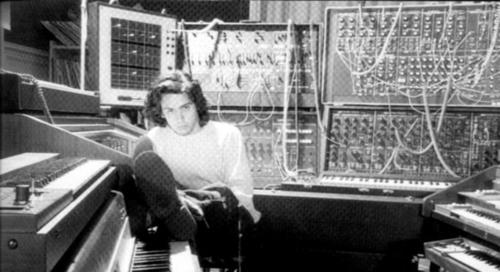
“Today, same as a piano or a saxophone, an ARP remains a classic instrument, and one that we’ll still be using in two centuries time,” notes Jarre. “After having weighed up the advantages of the virtual, today we’re realising that we’re made of flesh and blood…..and we have an absolute need for an emotional and tactile relationship with our instruments.”


Here are Jarre’s ten favorite synths. There are some surprises on the list – so check it out and let us know what you think of Jarre’s picks!


Jean Michel Jarre’s 10 Favorite Synths:


  •  E.M.S VCS 3 (1969) – “My first synth, Europe’s answer to the American Moog: a Mini versus a Cadillac. Post-war technology had led us to an European electronic sound which was very different to the American sound.”
  •  ARP 2600 (1971) – “ARPs are like the Stradivarius or the Steinways of electronic music. They were invented by craftsmen who, today, we’d place on the same level as the luthiers that built violins, clavichords, pianos – all of the acoustic instruments.”
  • ARP 2500 (1969) – “This is the big brother of the ARP 2600, created to compete with the modular Moog”.
  • Fairlight CMI (1979) – “The Fairlight is an instrument which immediately struck me as extraordinary when it first appeared on the market, because it brought to mind the way that I approached electroacoustic music when I started out – that’s to say with two decks, some scissors and some cellotape. The limits of this machine awarded it an extraordinary poetry.”
  • Roland JD-800 (1991) – “With the JD-800, you could modify the sound, as you can on an ARP or a Moog, but with a Japanese sound quality, which in some respects, is more refined.”
  • Memory Moog (1982) – “With the Memorymoog, and other synths that came out around the same time, in one fell swoop, we could make complete chords, and that changed everything. For better and for worse. As a result, we ceased to compose electronic music the classic way, as Wendy Carlos did. “
  • RMI Keyboard Computer (1974) – “It created a very different sound to anything else that could be heard at the time, precisely because the digital edge added a certain coolness. This synth was to music what the film Tron was to cinema at the time.”
  • Eminent 310 (1970) – “This synth defines my sound, from Les Mots Bleus by Christophe and the songs of Patrick Juvet, right up to Oxygène and Equinoxe, where I used it heavily. To this day, I still use it frequently.”
  • Teenage Engineering OP-1 (2011) – “It’s been a long time since I’ve seen something as interesting, flexible and creative as this. And importantly, its inventors have reintroduced a notion which had been desperately lacking: humour.”
  • Mellotron (1963) – “This is another mythical instrument from the electroacoustic scene, since it was one of the first samplers well ahead of the Fairlight. It’s the sound of the 40s adapted for the music of the 60s.”


We’ve included quotes from Jarre on his favorites, but he goes into more detail about each of the synths in the interview.
Jarre will featured at a Red Bull Music Academy session May 16, 2012. See the Red Bull site for details.

Thanks to reader MarkLouis for the tip!


Source: www.synthtopia.com/

18/05/2012

Les 10e Nuits Sonores Feat Jean-Michel Jarre


L'album Oxygène revisité par de jeunes musiciens lyonnais - L'invité Jean-Michel Jarre... (extrait 19/20 Rhône-Alpes - 16 mai) (interview O.Martin)

Nuits sonores lyonnaises : J-1

Les nuits sonores lyonnaises soufflent leurs dix bougies cette année

Pour la 10e année, Lyon accueillera du 16 au 20 mai le festival des Nuits sonores

A Lyon, les nuits sonores s'ouvriront mercredi prochain et pour cinq jours. Au programme de cette dixième édition : MF Doom, Simian, Mobile Disco, James Murphy, The Hacker ou encore New Order !

Jean-Michel Jarre sera l'invité de la Red Bull Music Academy pour un workshop organisé dans le cadre des Nuits Sonores 2012.


L'album Oxygène (1976) revisité. Son auteur, presque anonyme dans le public, a assisté au concert donné à l'Hôtel-Dieu...


Source: rhone-alpes.france3

Nuits Sonores de Lyon: 10 bougies et une reconnaissance internationale

Les Nuits Sonores© France3/culturebox


Lyon va vivre à partir d'aujourd'hui et jusqu'à dimanche au rythme des Nuits Sonores. 300 artistes de la scène électro sont au programme de ce qui est devenu en 10 ans une référence internationale de la musique électronique. Et ce ne sont pas les 80 000 spectateurs attendus ni Jean-Michel jarre qui nous contrediront.


Source: CULTUREBOX

Nuits Sonores 2012: un beau départ !

Les nuits sonores 2012© France 3/CultureBox


Un moment attendu par tous les passionnés de musique électro: les premiers concerts des Nuits Sonores. Un festival qui a démarré en trombe à l'Hôtel Dieu avec 3 artistes qui ont revisité l'album culte de Jean Michel Jarre, "Oxygene" en présence de l'artiste. La deuxième partie de soirée s'est déroulée dans le nouveau lieu investi par le festival : les anciennes usines Brossette. Du son électro qui résonne dans ce grand bâtiment industriel jusqu'au bout de la nuit, 3 scènes ont été installées, des lumières et les artistes se sont succédés pour le grand plaisir des festivaliers jusqu'au 20 mai prochain.


Source: CULTUREBOX

Les nouveaux lieux des Nuits Sonores 2012

Par Laure Narlian  Publié le 17/05/2012


Exit la Piscine du Rhône et le Marché Gare : les deux sites principaux des Nuits Sonores, ceux qui accueillent les plateaux de jour et les concerts de nuit, changent cette année. Le festival des musiques électroniques, qui fête ses dix ans du 16 au 20 mai à Lyon, investit l'Hôtel Dieu, en plein centre-ville, et Les anciennes usines Brossette. Le directeur Vincent Carry nous explique le pourquoi du comment.

Vous changez cette année de lieu, pourquoi ?

Vincent Carry : "Les raisons de la migration sont différentes pour chaque lieu. Pour le site des Nuits, nous avions un impératif de changement puisque le Marché Gare qui les accueillait depuis trois ans, a été détruit. Je ne suis pas mécontent car il s'agissait de la plus longue séquence du festival sur un même lieu. Notre principe a toujours été l'itinérance et la mise en valeur de nouveaux bâtiments patrimoniaux. Il n'est pas bon de s'endormir sur un même lieu. Notamment parce qu'en cherchant dans sa mémoire, on ne peut plus distinguer une édition d'une autre."


Pourquoi les anciennes usines Brossette ?

"Après avoir pensé à la Sucrière, qui accueillera New Order en clôture, nous avons eu la chance de tomber sur ces anciennes usines de sanitaire, une entreprise familiale fondée en 1840. Situé dans le 7e, à 12 minutes à pieds de l'hypercentre, le lieu, qui pourrait être détruit l'an prochain, accueille les trois nuits principales cette année. Le bâtiment, qui est intéressant en lui-même, rappelle l'esprit de l'ancienne Usine SLI restée dans les mémoires des festivaliers de l'édition 2008. Il bénéficie d'une scénographie pensée par nos architectes et artistes. Outre les trois scènes, il accueille ausi des bars et des restaus, toute une petite ville."

L'Hôtel Dieu remplace-t-il la Piscine ?

"Au départ, il était question d'une réhabilitation de la Piscine du Rhône et nous devions donc la quitter. Mais j'en avais déjà un peu marre. Les travaux ont finalement été repoussés et nous aurions pu y rester cette année mais j'avais déjà obtenu d'investir l'Hôtel Dieu. Je me suis battu pour ce site tout à fait exceptionnel. D'abord c'est un site patrimonial magnifique, un vieux bâtiment qui était encore en service il y a trois ans - ma fille y est née. Ensuite, il est situé en plein centre-ville, à deux pas de la place Bellecour. Enfin, c'est une occasion unique pour Nuits Sonores qui ne se reproduira plus : l'Hôtel Dieu va en effet être reconverti. A partir de la rentrée, il entrera dans la phase des fouilles archéologiques. Durant le festival, il accueille les concerts de jour ainsi que le Mini-sonore.  Dimanche, l'ensemble du site est dédié aux enfants. "


  MORE : CULTUREBOX

17/05/2012

Workshop pour Jean-Michel

Culture

Jean-Michel Jarre, l’un des premiers compositeurs français de musique électronique, était l’invité d’un workshop des Nuits Sonores – la Red Bull Music Academy Session.


 Au programme : l’inénarrable champ des mutations musicales en cours et à venir. Morceaux choisis.


Cohabitation entre l’analogique et le numérique

La naissance du CD a marqué l’arrêt de mort de la valeur du support musical. La musique se vend en supermarché, comme une boite de Kleenex ou des pots de yaourts. Mais le CD n’est pas plus solide qu’un vinyle, au contraire, sa qualité est absolument inférieure à ce qu’il se faisait auparavant.
Une succession de paradoxes et d’ambigüités ont fait de la musique électronique un objet bizarre. Et c’est tant mieux. L’électro a modifié notre relation au son, notre façon de consommer. Ce n’est pas un genre à part entière, mais plutôt un mode de réflexion, de production, de diffusion.
L’analogique et le numérique forment un mélange extrêmement riche. Le virtuel ne prend pas le dessus, bien au contraire. L’ordinateur n’a même pas réussi à enterrer le synthétiseur !
Aujourd’hui, le grand bouleversement devrait tenir dans la dilution des genres. Avec Internet, c’est la fin du diktat des frontières. Tous les sons de la planète sont désormais à notre portée. Les styles se mélangent et s’enchevêtrent. A l’instar du dubstep, assemblage de métal et de techno, résultat de raccourcis transversaux.

Son message à notre Ministre de la Culture fraichement nommée…

J’aimerais que la nouvelle Ministre de la Culture s’occupe enfin de la musique. Si Jack Lang a lancé le prix unique du livre en 1981, il aurait pu penser au prix unique du disque !
Le monde politique présente une vision démodée d’Internet, très années 90. Mais le monde de la musique doit également prendre ses responsabilités : en se structurant, majors et indépendants seront peut-être capables de transmettre un message plus clair.
Notre discipline reste franchement précaire par rapport à la littérature et au cinéma. Il est vital de reconnaitre les difficultés que rencontrent quotidiennement les artistes : sauf exception, il est devenu impossible de vivre de la musique. Et c’est absolument intolérable.

Sur ses gigantesques concerts en extérieur…

C’était un concept particulièrement neuf pour l’époque et absolument gratuit. J’ai grandi à Lyon, dans le quartier de la gare de Perrache. On y accueillait le cirque et la Vogue - la fête foraine locale. J’ai alors découvert la poésie du spectacle vivant en extérieur, son instantanéité, son absence de seconde chance.
J’ai toujours voulu développer la scénographie et utiliser les techniques visuelles de ma génération, pour que la performance soit aussi pertinente en concert. J’ai donc piraté des endroits en tout genre, le temps d’une nuit. En mettant en place des jeux de lumières et des effets pyrotechniques.
Entre Houston, Londres ou Moscou, chaque expérience a été incroyable, chaque rencontre improbable : je devrais en faire un livre !

Sur sa lyonnitude…

En tant que lyonnais, je me réjouis de l’anniversaire des Nuits Sonores. J’ai assisté à la naissance du festival il y a 10 ans : il fallait être carrément gonflé pour se lancer dans un tel projet ! L’événement est devenu une référence absolue. L’affiche, pertinente, fait le grand écart entre les différents invités.
Pour l’occasion, j’ai créé une installation sonore intitulée « Gone » - l’enfant dans le parler lyonnais. Et j’adorerais revenir en 2013 pour un méga-concert en extérieur !

Source: liberation

En dessins, les réflexions de Jean-Michel Jarre sur la musique

Culture


Jean-Michel Jarre remixé 36 ans après

Par ANASTASIA VÉCRIN 

 Les Nuits Sonores ont mis Oxygène au programme, revisité par trois DJ.


Jean-Michel Jarre le 1er juillet 2011 à Monaco. - Photo Jean-Paul Pelissier. Reuters


On a tous en tête cette mélodie. 1976, Oxygène révèle Jean-Michel Jarre et résonne aux oreilles du monde entier. 18 millions d’exemplaires sont vendus. Un succès planétaire pour cet ovni qui reste dans les annales de l’histoire de la musique. La preuve : trente-six ans après, Oxygène est au programme de Nuits sonores, revisité par Danger, Acid Washed et Arandel pour inaugurer cette édition anniversaire. Trois sons, trois univers très différents, la promesse de sets audacieux.
Invité d’honneur, Jean-Michel se dit très honoré et apprécie la pluralité des versions potentielles,  techno ou acoustique. D’autant plus qu’il entretient avec ce disque un rapport particulier : « Je ne suis pas obsédé par Oxygène mais il se trouve que le premier succès vous colle toujours à la peau. Au delà de ça, la face A du vinyle a un côté dévertébré, comme si la musique était en suspension. Il était primordial qu’aucun son ne soit identique. C’est ce qui en fait un objet si singulier. »
Un des représentants du projet Arandel, de la génération french touch des années 90, confirme le caractère incontournable de ce morceau : « C’est une pierre angulaire dans l’histoire de la musique électronique populaire. Cela a donné un coup de projecteur incroyable à une musique réservé à un public averti. Même si nous n’avons pas été biberonné aux synthétiseurs, nous sommes très excités par le défi de rendre cette matière moderne. »
Et pourtant... Moderne était déjà la pochette d'Oxygène. Y figure notre planète dévoilant une tête de mort, à une époque où l'écologie n'était pas à la mode. Jean-Michel Jarre se félicite de faire partie de cette génération : « A cette période, il y avait peu de moyens et comme Soulages je considère que les limites, c’est la liberté. C’est une chance de visiter un territoire quasi vierge. Cette innocence transparaît bien dans Oxygène. » Has been peut-être pour certains, mais encore une bouffée d’air.

Source: next.liberation